
Are Gold IRA Fees Too High? Breaking Down the Real Costs
If you’ve started researching Gold IRAs, you’ve probably noticed something that gives a lot of people pause: the fee structures can look complicated, and the numbers can add up quickly. It’s a fair concern. Before committing to any retirement account — especially one that involves physical precious metals and a more complex custody arrangement — it’s entirely reasonable to ask whether the costs are justified and how they stack up against what you’d actually receive in return.
This article won’t tell you whether a Gold IRA is right for you — that’s a decision only you can make, ideally with the help of a qualified financial advisor. What it will do is walk you through every category of fee you’re likely to encounter, explain why each exists, and help you understand what separates a reasonable cost structure from one that deserves more scrutiny. If you want a fuller picture of the mechanics first, our Gold IRA guide covers the foundations in plain English.
Why Gold IRA Fees Are Structurally Different
To understand whether Gold IRA fees are too high, it helps to first understand why they exist at all — and why they’re unavoidably more complex than fees in a conventional IRA.
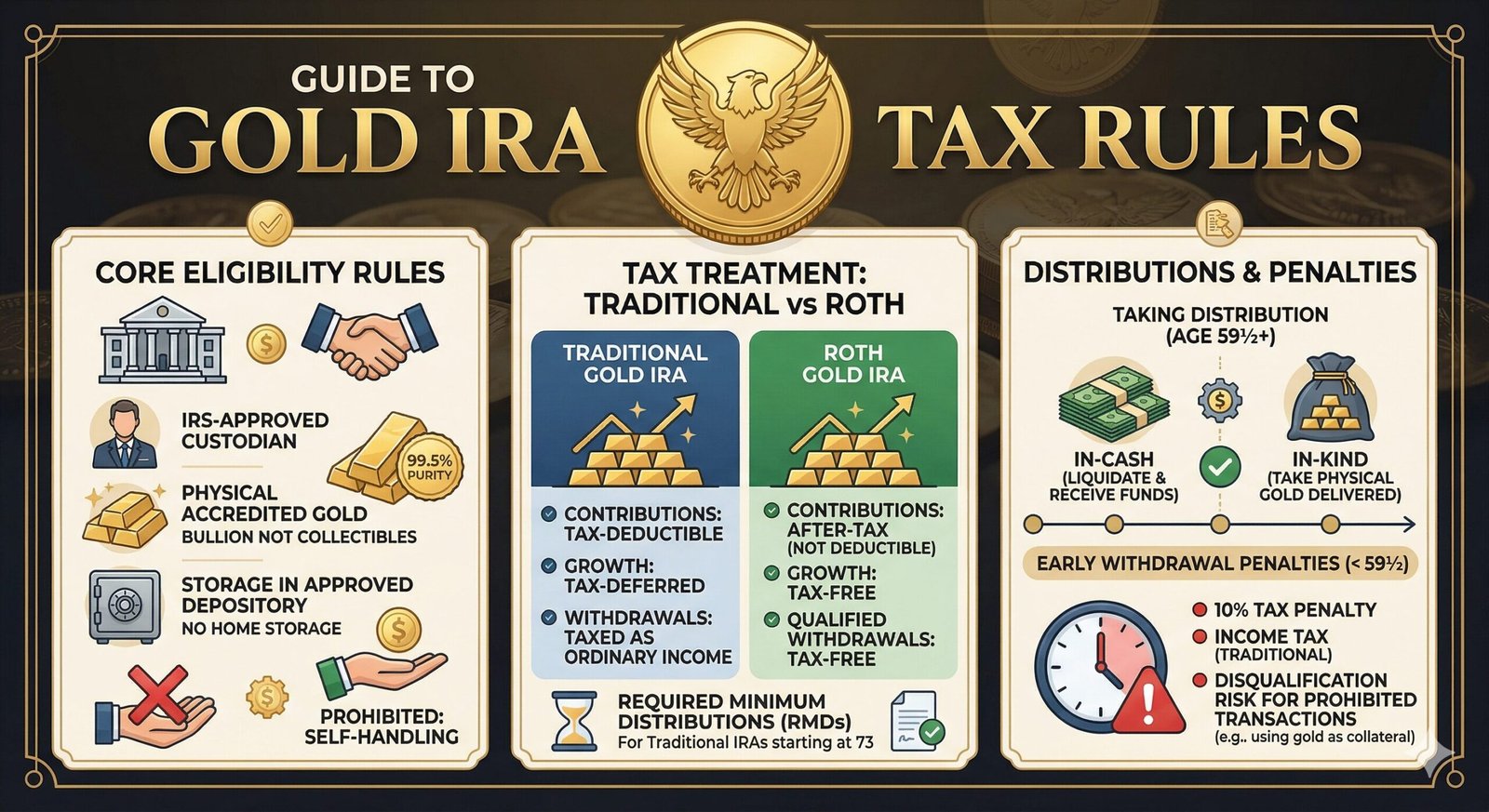
A standard IRA holding mutual funds or ETFs operates within a relatively streamlined system. The brokerage holds electronic records of your assets, and custody is inexpensive at scale. A Gold IRA holding physical bullion is a different animal entirely. The IRS requires that physical precious metals in an IRA be held by an approved custodian and stored in an IRS-approved depository — not in your home, not in a private safe. That custody and storage arrangement involves real infrastructure, real insurance, and real operational overhead.
You can read the IRS’s own guidance on this in the IRS IRA investment FAQ and in IRS Publication 590-A, which outlines the rules governing IRA custodians. FINRA also publishes FINRA’s guidance on self-directed IRAs that’s worth reading before you open any account of this type.
In short: the fees aren’t simply profit padding. They reflect genuine third-party services required by law. That said, how much those services cost — and how transparently they’re communicated — varies significantly between providers.
The Main Fee Categories You’ll Encounter
Account Setup Fees
Most Gold IRA custodians charge a one-time fee to establish your account. This covers the administrative work of setting up your self-directed IRA, verifying your identity, and integrating you into their system. Setup fees typically range from zero to around $300 depending on the provider.
Some companies waive this fee entirely for accounts above a minimum balance, or as a promotional offering for new clients. When comparing providers in our Gold IRA fees guide, you’ll notice that the setup fee is rarely where the material cost differences lie — annual charges matter far more over time.
Annual Custodian Fees
The custodian — the IRS-approved entity that legally holds your IRA — charges an annual administrative fee for maintaining your account. This typically ranges from $75 to $300 per year, though it can go higher with certain custodians or for more complex account structures.
This fee covers record-keeping, IRS reporting (including Form 5498 and 1099-R where applicable), transaction processing, and customer service. It’s worth noting that some dealers recommend specific custodians and may receive referral compensation in exchange — which is legal, but worth being aware of as you evaluate your options.
Storage Fees
Storage is often the most significant ongoing cost in a Gold IRA, and it’s also where pricing models differ most visibly between providers.
There are two common structures. Some depositories charge a flat annual fee — typically $100 to $200 per year — regardless of how much metal you hold. Others charge a percentage-based fee, usually between 0.5% and 1% of the total value of your holdings annually.
For smaller account balances, a flat fee is generally more cost-effective. For larger balances, the math can swing the other way. An account holding $150,000 in gold paying a 0.5% annual storage fee would owe $750 per year — significantly more than a flat $150 or $200 charge.
Storage also divides into two models: segregated storage, where your specific coins or bars are held separately from other clients’ metals, and commingled storage, where your metals are stored alongside others of the same type and weight. Segregated storage typically costs more and is preferred by investors who want certainty that the exact assets they purchased are the ones returned to them.
Seller Markups (Premium Over Spot)
This isn’t a line-item fee, but it’s one of the most significant costs you’ll encounter. When you purchase gold or silver through a Gold IRA dealer, you’ll pay a price above the prevailing spot price of the metal. This premium covers the dealer’s sourcing, minting, handling, and profit margin.
Premiums vary based on the type of metal (coins carry higher premiums than bars), the specific product, and the dealer’s pricing policies. For IRA-eligible coins — you can review what qualifies in our guide to IRA-eligible gold coins — premiums can range from a few percent to well above 10% in some cases.
This is one of the most important costs to scrutinize, because unlike annual fees it’s a cost you pay upfront and may never fully recover depending on how metal prices move. Comparing multiple dealers before purchasing is always sensible.
Transaction and Liquidation Fees
Each time you buy or sell metals within your Gold IRA, you may be charged a transaction fee. These vary widely — some providers include a set number of free transactions per year; others charge flat fees or a percentage of the transaction value.
When it comes time to take distributions — either in cash or by taking physical delivery of your metals — additional fees may apply. Liquidation fees, wire transfer charges, and shipping and insurance costs for physical delivery can all add to your total cost of exit. Understanding these upfront, before you open an account, is important.
A Side-by-Side Look at Typical Fee Ranges
Figures are estimates based on publicly available information and may vary by provider, account size, and market conditions.
What Makes a Fee Structure Reasonable vs. Concerning?
No fee is inherently “too high” or “too low” without context. The question is whether you’re receiving meaningful service in return, and whether the total annual cost is proportionate to the size of your account and your long-term intentions.
A flat storage fee of $200 per year represents a significant percentage drag on a $10,000 account but is relatively modest against a $200,000 account. Percentage-based fees work in the reverse — they scale with your balance, which can become expensive as your account grows. Neither model is universally better; the right choice depends on your situation.
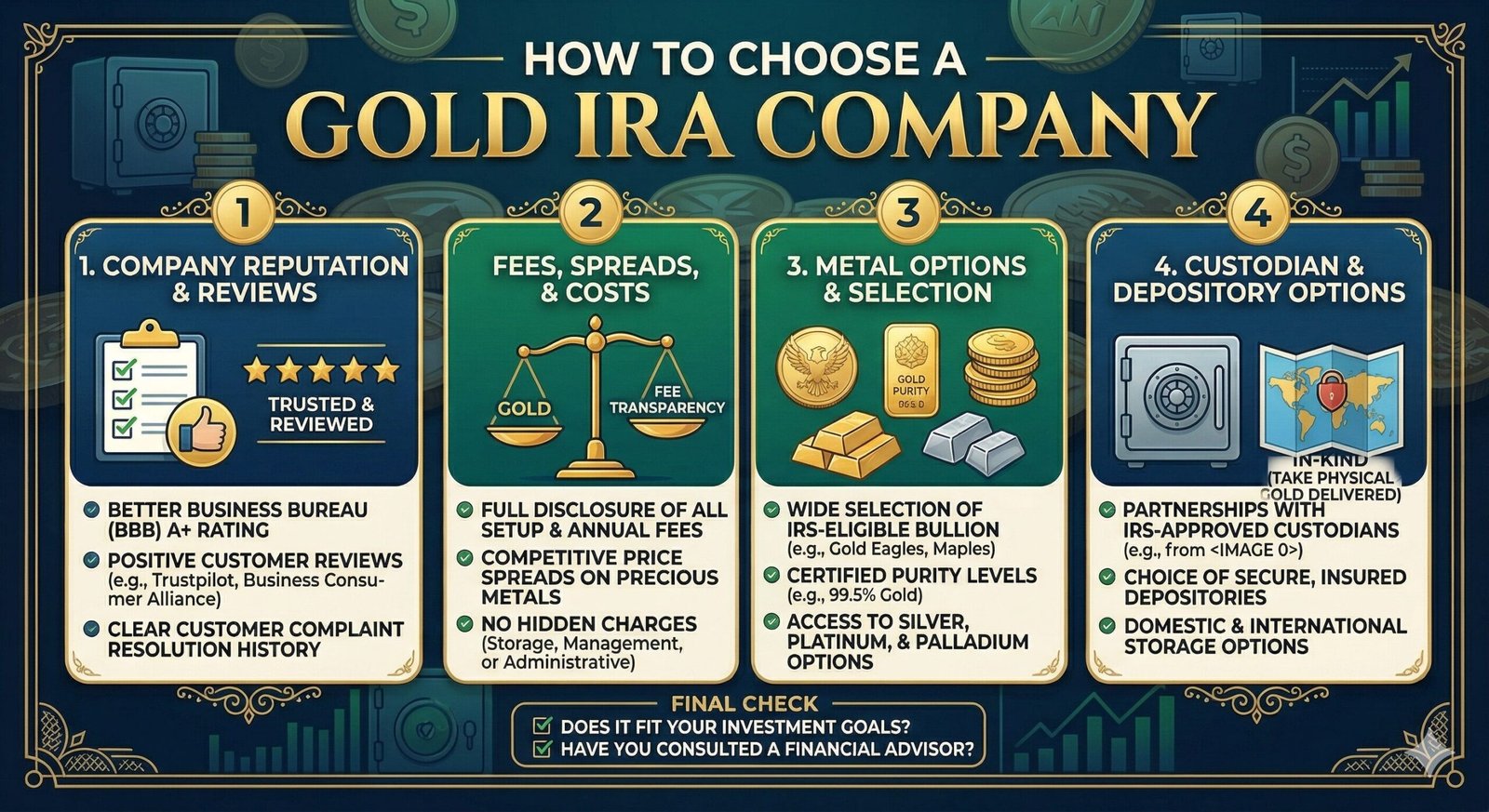
What does raise legitimate concern is opacity. If a provider cannot or will not clearly disclose all fees in writing before you open an account, that’s a signal worth heeding. Reputable custodians and dealers are transparent about their entire fee structure from the outset. You can cross-reference companies at bbb.org and check FINRA BrokerCheck to review any complaints or disciplinary records. Our Gold IRA scams guide also outlines what to watch for when evaluating providers.
How Fees Compare Across Account Types
It’s worth acknowledging that Gold IRAs do cost more to maintain than conventional IRAs. That’s simply a factual reflection of the additional custody, storage, and compliance requirements involved. For a fuller comparison of how the two account types differ beyond just fees, our Gold IRA vs Traditional IRA breakdown is a useful reference.
If you’re considering moving funds from a workplace plan, our 401(k) to Gold IRA rollover guide and Gold IRA rollover rules pages cover the mechanics in detail, including how to avoid common and costly mistakes during the transfer process. For more on minimum investment thresholds — which affect how meaningfully fees impact your total cost — see our Gold IRA minimum investment guide.
The SEC’s investor resources are also worth bookmarking as an independent reference point for evaluating any retirement account structure.
Questions to Ask Before Opening a Gold IRA
Before committing to any Gold IRA provider, consider asking each of the following directly:
What are the total annual fees I should expect to pay? Request a written breakdown, not a verbal summary. Include custodian fees, storage fees, and any service charges.
What is your markup above spot price? Ask this specifically for the type of metal you intend to purchase. If the answer is vague or unavailable, treat that as a red flag.
Do you use segregated or commingled storage, and what is the annual cost of each? Understanding your options here affects both cost and the nature of your ownership.
What does liquidation cost, and what is the process? Knowing the exit process before you enter is just as important as understanding the entry costs.
For a comprehensive look at whether this type of account suits your retirement planning needs, our article on is a Gold IRA a good idea explores the broader considerations in detail.
Frequently Asked Questions
Are Gold IRA fees tax-deductible?
This article cannot provide tax advice, and the answer to this question depends on your individual circumstances, account type, and how fees are structured and paid. Speak with a qualified tax professional for guidance specific to your situation.
Why do Gold IRAs cost more than regular IRAs?
Physical precious metals require IRS-approved custodians and approved depositories for storage — a legal requirement outlined in IRS rules. These third-party services involve real infrastructure, insurance, and compliance overhead that simply don’t exist in conventional IRAs holding electronic assets.
Is a percentage-based or flat storage fee better?
It depends on your account size. For smaller balances, a flat fee is typically more cost-efficient. For larger balances, the reverse may be true. Always calculate your projected annual cost in dollar terms across multiple fee scenarios before choosing a provider.
How do I know if a Gold IRA company’s fees are reasonable?
The most reliable approach is to request full written fee disclosures from multiple providers and compare them directly. You can also check company reviews and complaint histories at bbb.org and FINRA BrokerCheck. Transparent, plain-English fee disclosure is itself a positive indicator of a reputable provider.
Can I reduce Gold IRA fees over time?
Some custodians offer fee reductions for larger account balances or long-term clients. Negotiation is sometimes possible, particularly for higher-balance accounts. You should also periodically review your fee structure, as some providers adjust fees over time — sometimes without prominent notification.
Start Your Research in the Right Place
Understanding the full cost picture of a Gold IRA is one of the most important steps in evaluating whether this type of account fits your retirement plans. Fees are real, they compound over time, and they deserve careful scrutiny — but they don’t tell the whole story on their own. The quality of the custodian, the transparency of the dealer, and the soundness of the overall arrangement matter just as much.
For a curated, up-to-date comparison of providers who meet our standards for transparency and service quality, visit our Best Gold IRA Companies of 2026 page, where we’ve done the comparative research so you don’t have to start from scratch.
This article is for informational purposes only and does not constitute financial or tax advice. Investing in precious metals involves risk including possible loss of principal.
Related guides
- Gold IRA Consumer Affairs Reviews: What to Look For
- Gold IRA Trustpilot Reviews: What Real Customers Say
- Gold IRA BBB Complaints: What Consumer Reports Reveal
- Is a Gold IRA Worth the Fees? A Cost-Benefit Analysis
- Gold IRA Mistakes to Avoid: 10 Common Errors Investors Make
- Gold IRA: 15 Questions to Ask Before Opening an Account